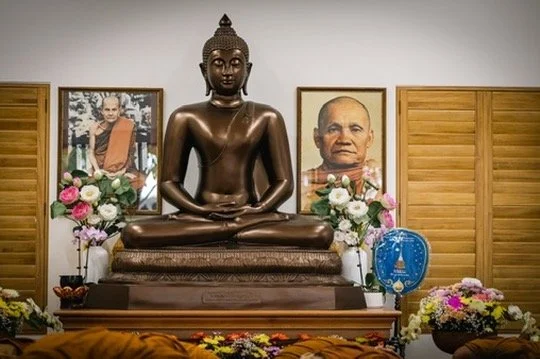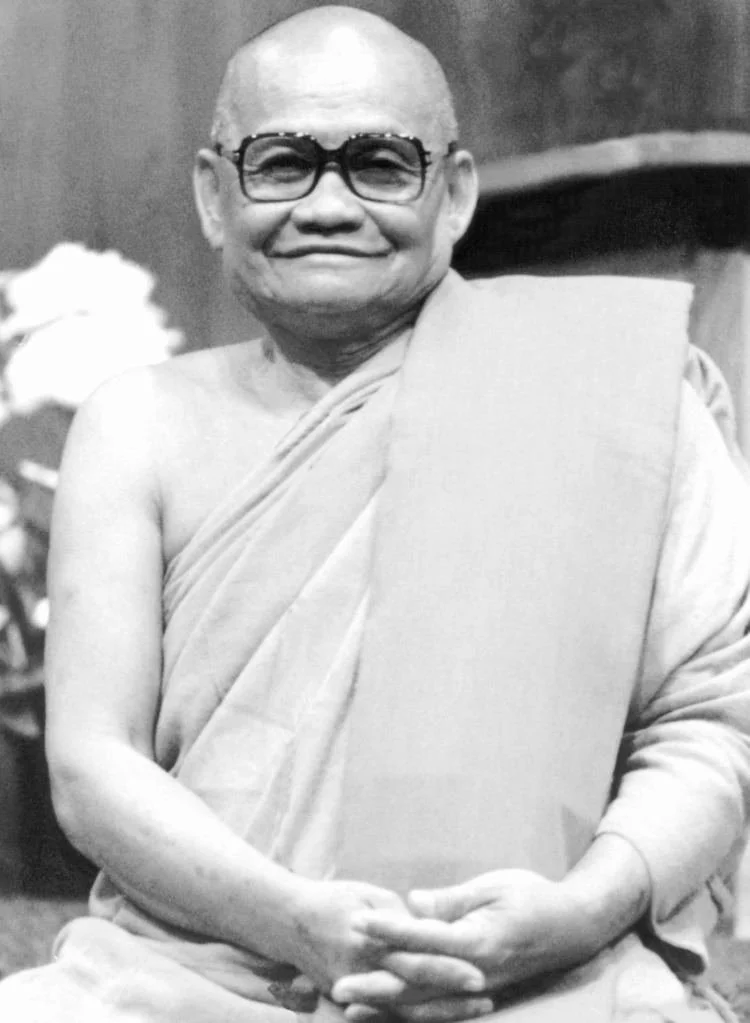
Venerable Luang Por (Ajahn) Chah
Venerable Ajahn Chah (Bodhiñana Thera) was born in 1918 in a farming village in Ubon Rachathani province, Northeastern Thailand.
-
He ordained as a novice monk for a brief period in his youth, and at the age of 20, still deeply attracted to monastic life, took full ordination. After following the traditional curriculum of Buddhist studies customary in Thailand at that time, he eventually grew disenchanted with study. In 1946 he took up the austere life of a wandering forest monk.
Thailand’s tradition of forest-dwelling monks, having waned in previous centuries, had been revived recently by renowned meditation master, Ajahn Mun.
Inspired by this teacher’s example, many monks in early twentieth century Thailand abandoned sedentary lives of study to wander the forest as the Buddha had, practicing strictly in line with the Vinaya — the Buddhist code of monastic discipline — and single-mindedly pursuing meditation as a path to the realization of truth. Desiring to find the real essence of the Buddha’s teachings, Ajahn Chah followed the example of such wandering monks. He spent the following eight years of his life searching out remote wilderness areas and practicing meditation under various teachers of the tradition, including Venerable Ajahn Mun himself.
After many arduous years of travel and practice, Ajahn Chah was invited to settle in a thick forest grove, known as a dwelling place of tigers, cobras, and spirits, near the village of his birth. The monastery that eventually grew up there came to be known as Wat Nong Pah Pong. The conditions were difficult and the basic living requisites scarce. Out of faith and loyalty to their teacher, Ajahn Chah, the monks and nuns willingly endured these myriad hardships to follow the path and teachings Ajahn Chah lovingly laid out for them.
In 1968, Ajahn Sumedho, an American intrigued by the strict monastic discipline and way of life, came to study under Ajahn Chah. From this time on the number of Western disciples grew, and the first overseas branch monastery of Wat Nong Pah Pong was established in England in 1979. Today, Ajahn Chah’s teachings and disciples are dotted across the globe, with additional monasteries in Switzerland, Italy, France, Australia, New Zealand, Canada and the U.S.A.
In 1981 Ajahn Chah’s health began to fail, culminating in the need for a brain surgery. Despite this intervention, his condition became progressively worse, and he spent the last ten years of his life bedridden and unable to speak. Throughout this time he was carefully tended by his faithful disciples.
On the 16th of January, 1992, Venerable Ajahn Chah passed away at the age of 74, leaving behind a lineage that is still growing today. He is credited with the highest spiritual accomplishments of the Buddhist path and was loved for his humor and wisdom. Individuals interested in the liberating teachings of the Buddha, both monastic and lay, Thai and international, traveled far and wide to seek out even a short audience with this extraordinary yet down-to-earth man. The warm embrace of Ajahn Chah’s compassionate presence touched many hearts around the world, and his sharp wisdom were always at hand to help others find their way to true peace of mind.
Headed by the King and Queen of Thailand, his funeral was attended by nearly a million people, paying their last respects to a man who truly embodied the Buddha’s teachings. To this day thousands of monastics and lay people come to pay respects and practice the Dhamma on the anniversary of Ajahn Chah’s death. As Ajahn Chah’s disciples remind us on such occasions, the best way to honor his memory is to practice and realize for ourselves the freedom to which Ajahn Chah so compassionately pointed the way.
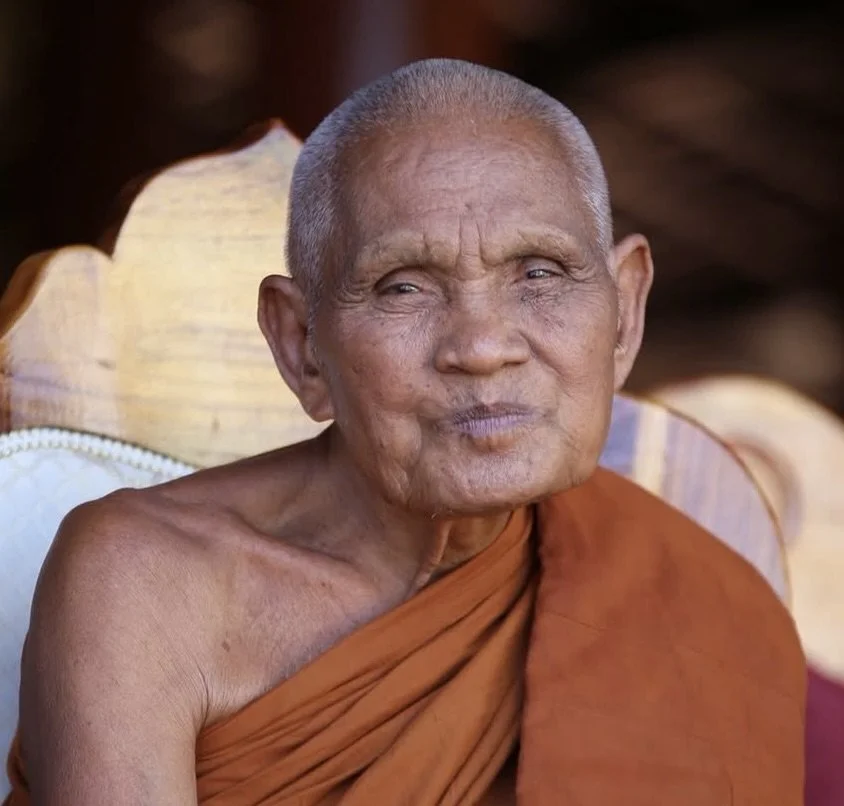
Venerable Luang Por Liem
Luang Por Liem, also known as Phra Brohmvachiranyanasophon (Liem Thitadhammo), was born on 5 November 1941 in Ban Khok Chan, Sisaket Province, Northeast Thailand.
-
Raised in a humble farming family, he grew up in a simple rural environment shaped by hard work, self-reliance, kindness, and strong Buddhist values. From a young age he was known as a quiet, disciplined, and thoughtful person who loved peace and simplicity.
At the age of seventeen, Luang Por left his home village to seek work and life experience in other parts of Thailand. During this period he worked in several provinces, including Trang in Southern Thailand, where he was employed by a Muslim family who treated him with great kindness and respect. This experience deeply influenced him, teaching him the importance of compassion, harmony, and mutual respect between people of different cultures and religions.
In 1960, at the age of nineteen, he ordained as a novice monk at his village monastery, Wat Ban Khok Chan. Even as a young novice he showed exceptional determination in his studies and practice, quickly memorising traditional chanting and dedicating himself wholeheartedly to monastic discipline. He often practised meditation alone in cremation grounds, courageously confronting fear and developing mindfulness and inner strength.
Luang Por received higher ordination as a bhikkhu in 1961. In his early years as a monk he travelled widely seeking education and spiritual training, studying Buddhist scriptures while also dedicating himself to meditation practice. He was especially drawn to the teachings on renunciation, mindfulness, and purity of conduct. Through disciplined training he developed a deep respect for the Dhamma-Vinaya and a sincere aspiration to live the holy life fully.
Later, Luang Por became a close disciple of Ajahn Chah at Wat Nong Pah Pong, one of the most influential monasteries of the Thai Forest Tradition. Ajahn Chah recognised Luang Por’s sincerity, humility, and steadfast practice, eventually entrusting him with important responsibilities within the monastery. After Ajahn Chah became seriously ill, Luang Por played a major role in preserving and continuing his teacher’s tradition and standards of monastic practice.
Following Ajahn Chah’s passing in 1992, Luang Por Liem became the Abbot of Wat Nong Pah Pong and the spiritual head of the international branch monasteries connected to the Ajahn Chah tradition throughout Thailand and around the world. He is highly respected for his simplicity, humility, wisdom, and unwavering commitment to the Dhamma-Vinaya. His teachings emphasise mindfulness, contentment, renunciation, harmony, and practising the Dhamma sincerely in everyday life.
Today, Luang Por Liem is regarded as one of the senior living masters of the Thai Forest Tradition and continues to guide monks, nuns, and lay practitioners internationally through his example of quiet compassion, disciplined practice, and deep devotion to the teachings of the Buddha.
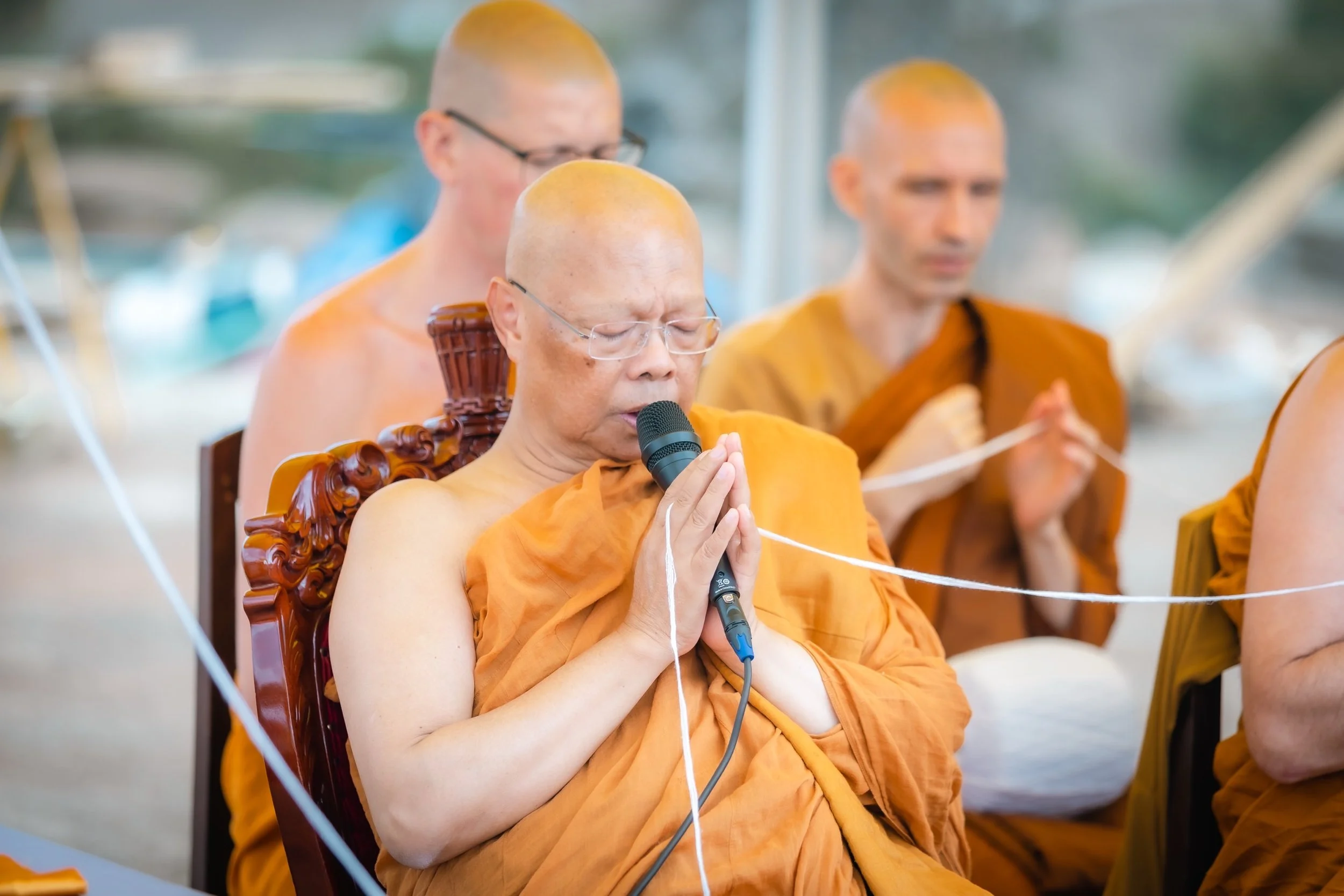
Venerable Luang Por Anan
-
with the name of Anan Chan-in. From an early age he regularly accompanied his parents to the local temple to chant and pay respects to the monks, and felt great faith at seeing monastery images of the Buddha. He excelled in his studies and was hired soon after graduation as an accountant at the Siam Cement Company. Though a diligent employee, he found himself increasingly drawn to Buddhist practice and began living at a nearby monastery during his hours away from work.
For the next year, he worked as an accountant while strictly observing the eight precepts of a lay practitioner and increasing his efforts in practice. After offering food to the monks each morning, he traveled to work and then returned to the monastery in the evening to meditate. The insight resulting from his practice eventually removed any remaining doubts about committing his life to the Buddha’s teachings, and he decided to enter the monastic order.
On July 3rd, 1975, the he took full ordination under his preceptor and teacher, the Venerable Luang Por Chah and was given the Pali name Akiñcano, meaning “One Without Worries.” He spent the next four years practicing meditation at Luang Por Chah’s main monastery, Wat Nong Pah Pong, and associated branches, developing a close relationship as Luang Por Chah’s personal attendant.
Luang Por Anan’s understanding of the practice developed quickly from spending so much time near his teacher, and he was soon encouraged by Luang Por Chah to search out more secluded places to further his efforts in meditation. Wandering the arid forests of Isaan and thick jungles of Central Thailand for the next five years, Luang Por Anan met with wild animals, five near-fatal bouts of malaria, and other difficulties of the untamed wilderness.
In 1984, Luang Por Anan ended his wandering to found a monastery on a newly-offered section of uninhabited land on the coast of Central Thailand. Accompanied by two other monks and a novice, the group settled in the dense forest of Rayong province at what is now known as Wat Marp Jan, or “Monastery of the Moonlit Mountain”.
Over fourty years later, Luang Por Anan’s reputation as an accomplished meditation teacher has grown, along with the number of monks coming to live under him. While his teachings stress the fundamentals of day-to-day meditation and mindfulness practice, Luang Por Anan is also known for his ability to articulate the Buddhist path in terms that practitioners of varied backgrounds can understand. His instruction has attracted a large following of foreigners, with monks from Australia, Brazil, Sri Lanka and elsewhere residing at Wat Marp Jan and its branches. Today, Luang Por Anan attends to his duties as abbot and teacher, looking after a growing number of branch monasteries in Thailand and overseas, teaching visiting laity, and instructing the monks who practice under his guidance.
Venerable Phra Rajvachiranyan or Luang Por Anan Akiñcano was born in the provincial town of Saraburi, Central Thailand, on the 31st of March, 1954,
-
and had the good fortune to see the documentaries “The Mindful Way” and “The Buddha Comes to Sussex” about the life and teachings of Venerable Luang Por Chah. He began practicing meditation on a regular basis during his time at university and this led to his decision to travel to Thailand in 1983 and seek out a meditation teacher. Having been advised to visit Venerable Luang Por Chah in Ubon, Venerable Luang Por Kalyano stayed and practiced at Wat Pa Nanachat as an ‘anagarika’ or a white robed trainee monk and received Samanera ordination at the end of 1984.
Venerable Luang Por Kalyano entered the Bhikkhu Sangha at Wat Nong Pa Pong in 1985 and continued his training at Wat Nong Pa Pong, Wat Pa Nanachat and associated monasteries. He regularly spent long periods of time at Wat Nong Pa Pong helping to nurse Venerable Luang Por Chah through his extended period of illness. Venerable Luang Por Kalyano also continued to translate Dhamma teachings from Venerable Luang Por Chah and other forest Ajahns, and this work continued when he began training under Venerable Luang Por Anan in 1991.
Venerable Luang Por Kalyano also spent much of his early years as a monk staying out in the forests of Thailand practicing in the tradition of a wandering “dhutanga” monk. During this period he lived in a very simple and ascetic way and devoted himself to developing and deepening his understanding of the Buddhist path.
In April 2001, after a piece of forest land had been offered to the Sangha of Venerable Luang Por Chah, Venerable Luang Por Kalyano was invited to travel to Australia and continue his practice in East Warburton. Since the beginning of Buddha Bodhivana Monastery, Venerable Luang Por Kalyano has been the resident teacher of the growing numbers of Sangha and laity residing at the monastery. In 2008 he was given the title of Upajjhaya or Preceptor by the Supreme Sangha Council of Thailand, which allowed him to perform the Upasampada or Admission Ceremony for new monks at the monastery.
Venerable Luang Por Kalyano continues to practice and teach at the monastery and is also regularly invited to offer teachings about the Buddhist path, both in Australia and overseas. In August 2016, His Majesty King Bhumibol Adulyadej of Thailand chose Venerable Luang Por Kalyano to receive the honorary title of Chao Khun Sophon Bhavanavithet in recognition for his contribution in spreading the teachings of the Buddha, and the title was formally conferred on him in a ceremony at the Grand Palace in Bangkok on 5 December 2016 by the new King, His Majesty King Vajiralongkorn.
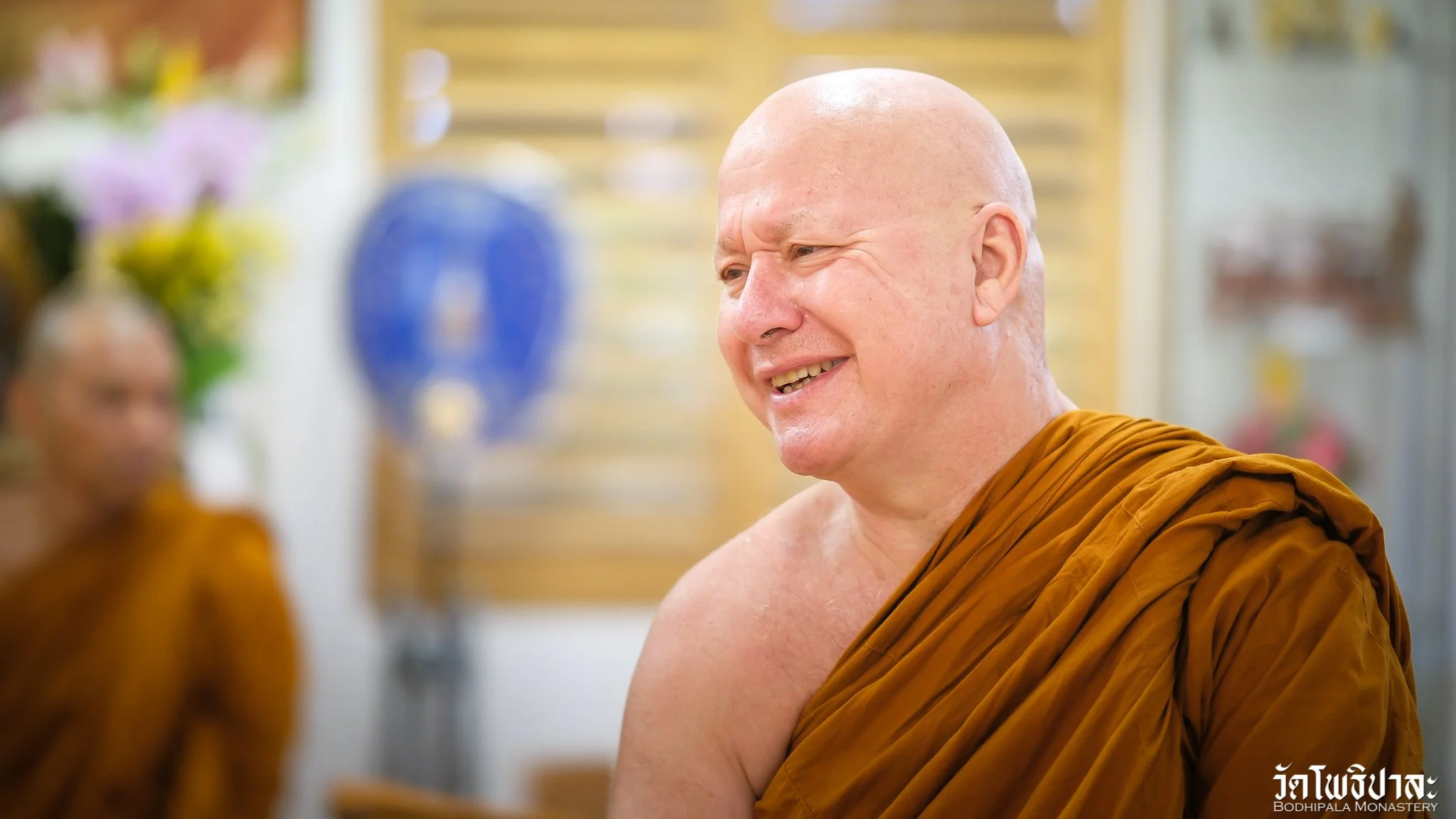
In 2018 Luang Por Kalyano accepted an offer of a piece of land in South Australia to establish the first branch monastery of Buddha Bodhivana Monastery which he named Bodhipala Monastery.
Venerable Phra Sophonbhavanavithet or Luang Por Kalyano was born in the UK and became interested in Buddhism at high school
Luang Por Kalyano
Ajahn Nyanadipo
-
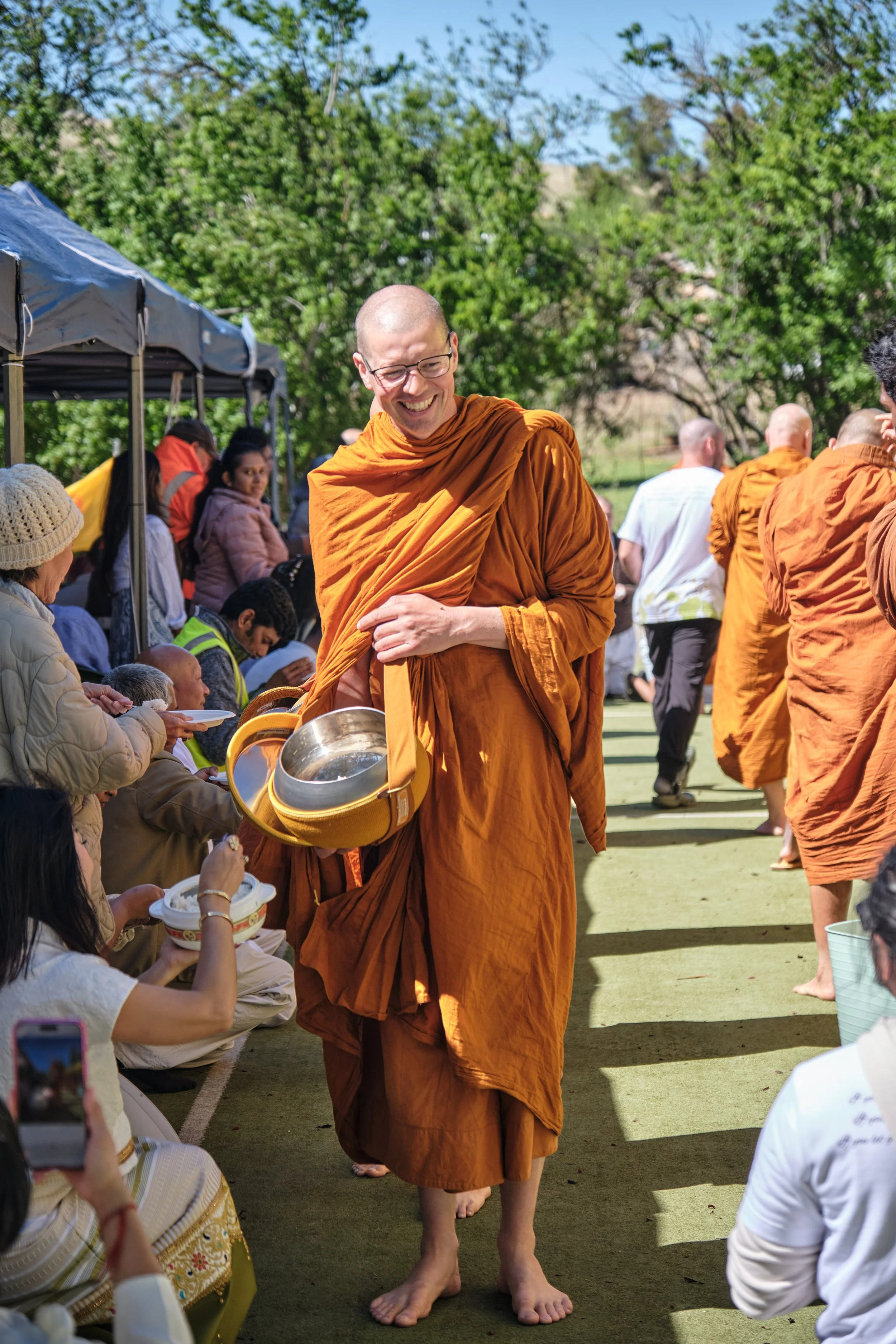
and developed an interest in Buddhism while attending high school. After completing high school and undertaking one year of tertiary education, he became increasingly drawn to the monastic life of the Thai Forest Tradition.
At the age of 19, Ajahn Nyanadipo requested permission to stay at Bodhinyanarama Monastery. After several months of practice there, the Abbot recommended that he travel to Buddha Bodhivana Monastery to study and train under Luang Por Kalyano. On 14 March 2004, Ajahn Nyanadipo arrived at Buddha Bodhivana Monastery to begin his monastic training under Luang Por Kalyano as his teacher.
On 15 December 2005, Luang Por Kalyano took Ajahn Nyanadipo to Thailand to undertake full ordination (Upasampadā) with Luang Por Liem at Wat Nong Pah Pong. After spending 15 years training under Luang Por Kalyano at Buddha Bodhivana Monastery, he helped to establish the new branch monastery in South Australia.
In 2025, Ajahn Nyanadipo sat and passed the Upajjhāya examinations in Thailand, qualifying as an official preceptor. In June of the same year, he received the ecclesiastical title “Phra Khru Buddhinyanavithet” from his Majesty King Vajiralongkorn.
Ajahn Nyanadipo currently serves as the Abbot of Bodhipala Monastery.
Ajahn Nyanadipo was born in New Zealand in 1984